Governor Diane Carrow has made the first regulation of her time in office: a set of minimum standards that every emergency service in San Andreas will have to meet, from county fire departments to sheriff's offices.
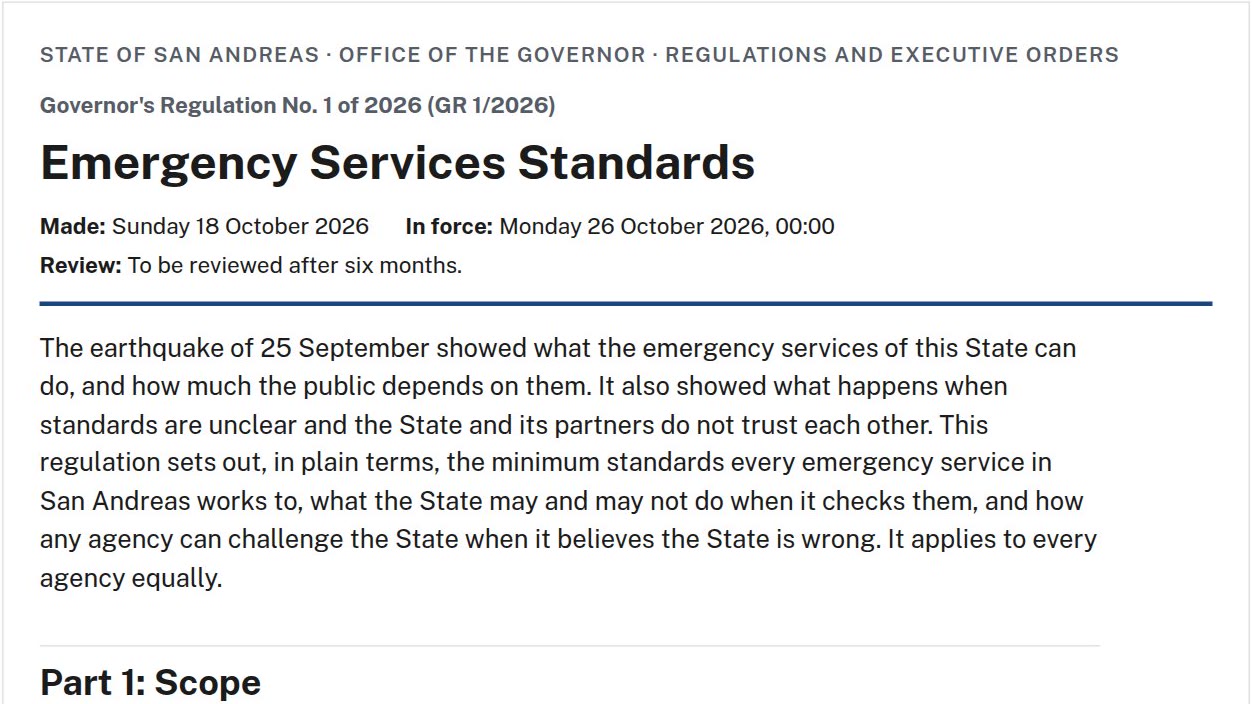
Governor's Regulation No. 1 of 2026, Emergency Services Standards, was published in the State's register of regulations early on Sunday morning and announced in the Gazette as notice SAG 2026/010. It comes into force at midnight on Monday 26 October.
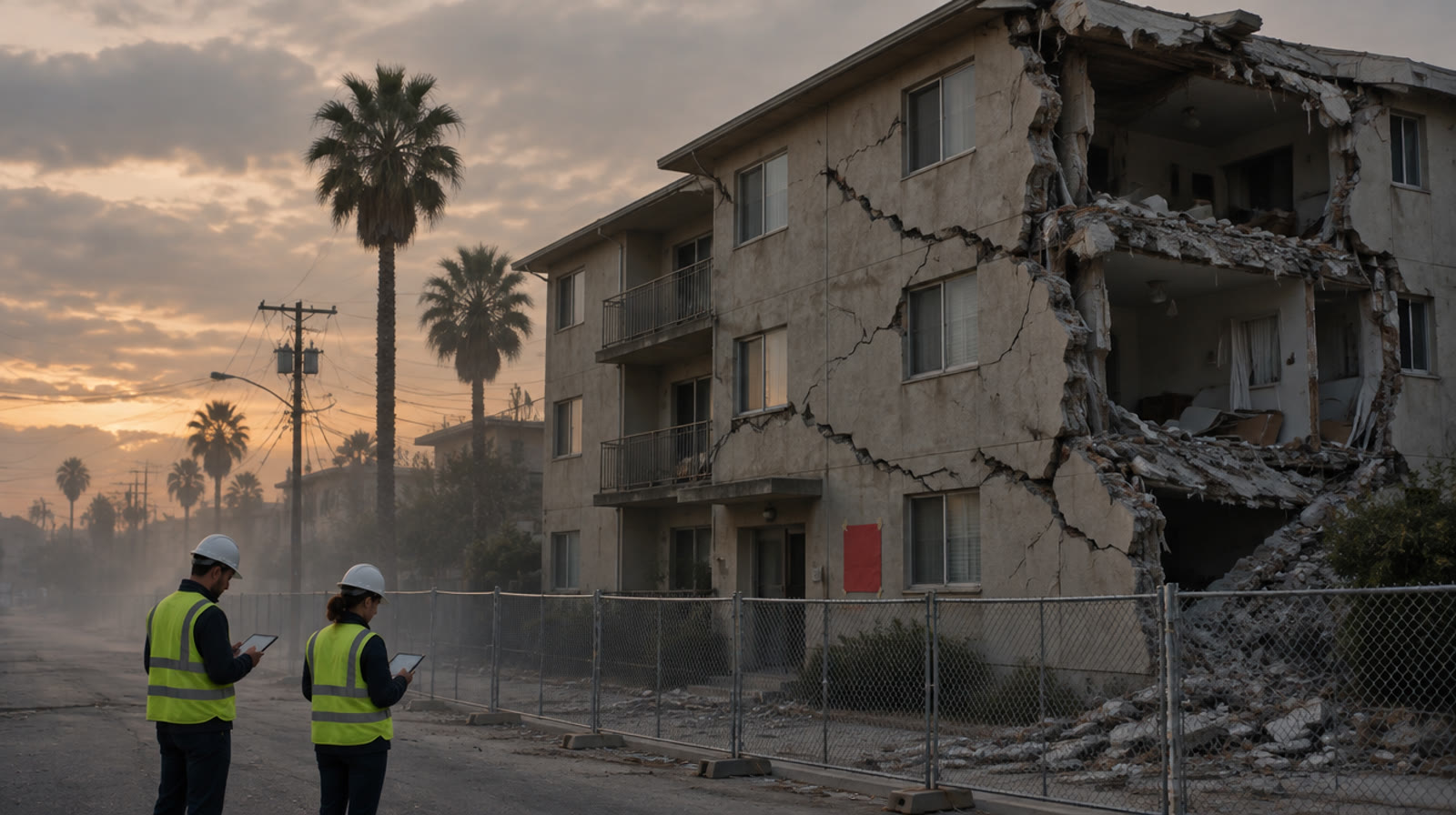
In its opening words the regulation says the earthquake of 25 September “showed what the emergency services of this State can do, and how much the public depends on them. It also showed what happens when standards are unclear and the State and its partners do not trust each other.”
What agencies will have to do
Every agency, whether State, county or municipal, must have a written uniform and appearance policy approved by its own head, and file a copy with the Office of Emergency Services within 14 days of the regulation taking effect. That puts the first deadline at Monday 9 November.
Members must follow their own agency's policy on duty and when representing their agency at official or public events. What they wear off duty at private and social occasions is not covered.
Stations must keep up-to-date records of vehicle and equipment checks, protective kit, training and, where it applies, custody, armoury and evidence handling, with each entry dated, timed, named and signed.
The regulation also sets a conduct standard. Abusive, threatening or demeaning language towards a State official carrying out a lawful inspection becomes a breach, and the same duty to behave professionally is placed on State officials towards agency staff.
Inspections, in writing
The Director of Emergency Services, or an inspector they authorise, may inspect the stations, records and equipment of any agency that receives State money or takes part in State mutual aid. Every inspection must end with written findings, and the regulation says verbal findings alone “have no effect”.
Agency heads will have seven days to reply in writing, accepting each finding or explaining why they disagree, and must attend a meeting within 14 days if the Director asks for one.
Where a finding concerns public or crew safety, the Director can issue a written inspection order. Ignoring one is already an offence under section 1054 of the Fire Code. The regulation creates no new criminal penalties of its own.
What the State cannot do
The regulation spends almost as much space limiting the State as it does the agencies. Money already owed to an agency for work done, including mutual-aid and earthquake response costs, “may never be withheld”. No step may reduce an agency's ability to respond to emergencies, and the State may not discipline, suspend or remove a member of a county or municipal agency. Concerns about an agency head go to that agency's own governing body.
Consequences come in steps: a written notice first, then a formal notice to the agency's governing body and a pause on new discretionary State grants, and finally a move from a lead to a supporting role in State-tasked operations.
Any agency can appeal a finding or step to the Secretary of State, Evelyn Hartley, who must decide within 14 days and give reasons. The two harsher steps are paused while an appeal is heard. Complaints about the conduct of State officials also go to the Secretary of State rather than to the Office of Emergency Services.
The regulation applies only to what happens after 26 October. A clause headed “No backdating” says nothing that happened before that date may be dealt with under it.
Why now
The rules arrive three weeks after Governor Carrow cancelled the measures issued in the State's name in the days after the earthquake, including investigations into individual responders, and a day after she appointed a new cabinet, among them Owen Fairbanks as Director of Emergency Services.
The Office of the Governor said the regulation was made under its emergency powers and will be reviewed after six months. It is signed by the Governor and countersigned by the Secretary of State.
Weazel News has asked the Blaine County Sheriff's Office and the Blaine County Fire Department how they intend to meet the new standards. Neither had responded at the time of publication.
The full text is available in the State's register of regulations at gov.roleplayproject.net.